Poolguide
AN EXCELLENT POOL EXPERIENCE
Pool water under perfect control.
Water care in the pool area plays a crucial role in the health and well-being of pool users. Well-maintained pool water is not only visually appealing, but also important for hygienic safety. Regular water care helps to keep the water free from harmful microorganisms, bacteria, viruses and algae. To ensure well-balanced pool water, certain parameters are of great importance: pH value, chlorine, alkalinity and water hardness.
Chlorine
Chlorine is the most commonly used disinfectant in the pool area. It kills harmful bacteria, viruses and algae, thus ensuring hygienically clean water. The chlorine value should be between 0.3-0.8 g/L free chlorine. Regular monitoring of the chlorine value and, if necessary, additional dosing are crucial in order to maintain the disinfection effect. This can be done manually or fully automatically. Modern measuring and control systems offer several advantages here: Not only is the chlorine level monitored, but the electrolysis system is also controlled as required to prevent unnecessary consumption of resources and ensure an optimum pool experience at all times. In addition, this works without the need to add chemicals and purely via the electrolysis process. This also saves you having to buy and handle hazardous chemicals. This makes your pool a healthy and low-maintenance experience.
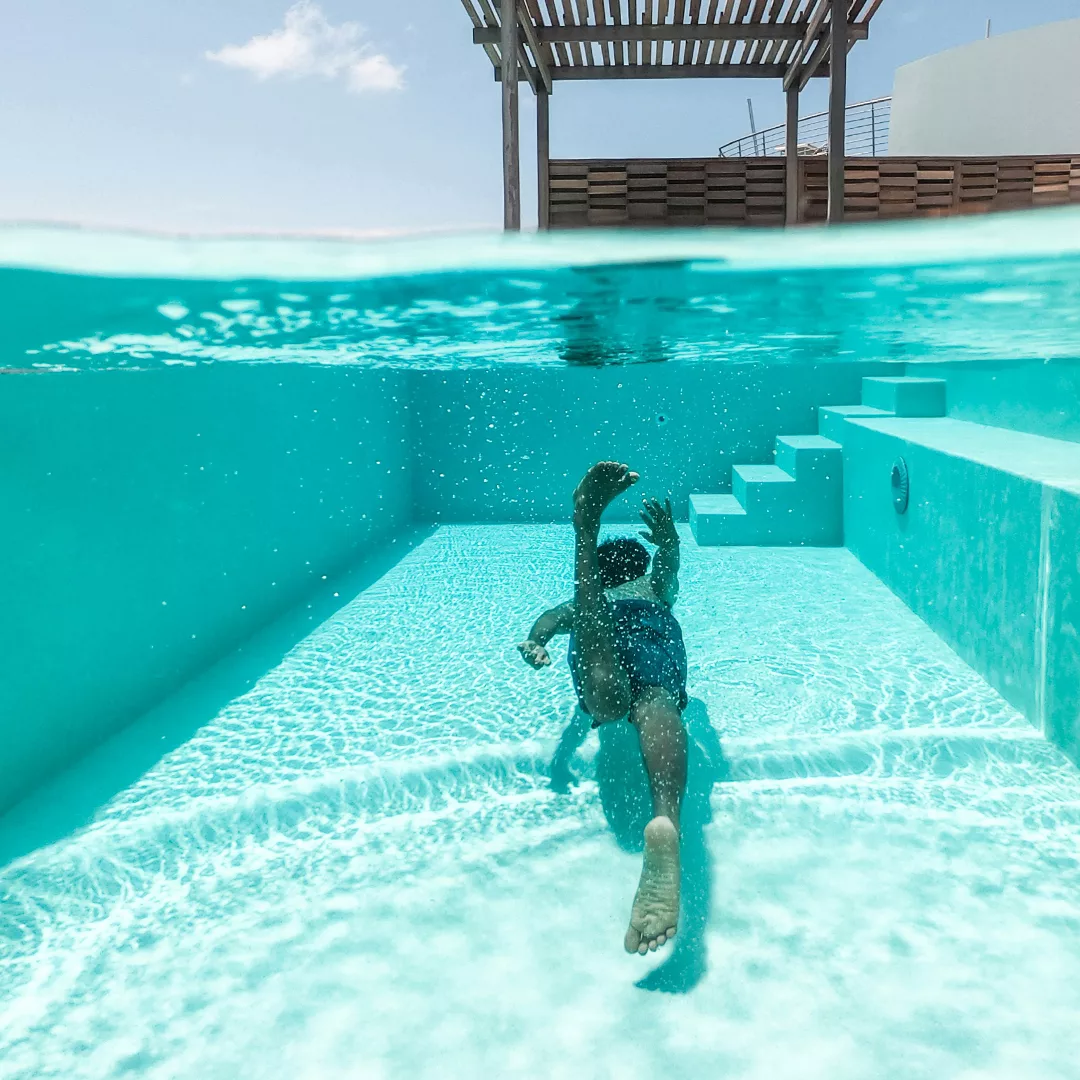

The pH value is a measure of the acidic or alkaline character of the pool water. An optimum pH value is between 7.2 and 7.6. An incorrect pH value can impair the effectiveness of the disinfectant and lead to skin irritation or stinging eyes. It is therefore important to check the pH value regularly and adjust it if necessary.
The alkalinity
Say goodbye to the unpleasant chemical odours that occur with conventional chlorination. Water that has been treated by an EWT system is characterised by its gentleness to the skin and does not irritate the eyes or mucous membranes. Our system is the ideal choice for pools used by children or people with sensitive skin.
Frequency of measurements
The frequency of the measurements depends on various factors, such as the use of the pool, the weather and other circumstances. As a rule, the water values should be checked at least once a week. More frequent measurements may be necessary if the pool is used more frequently or after heavy rainfall.
The water hardness
Say goodbye to the unpleasant chemical odours that occur with conventional chlorination. Water treated by an EWT system is characterised by its gentleness to the skin and does not irritate the eyes or mucous membranes. Our system is the ideal choice for pools used by children or people with sensitive skin.Water hardness refers to the content of dissolved calcium and magnesium salts in the pool water. An appropriate hardness (usually between 200 and 400 ppm) is important to prevent deposits and corrosion. Too low a hardness can lead to corrosion of metal parts, while too high a hardness can lead to limescale deposits. The following options are available for checking the water values: Taking water samples, test kits, electronic measuring devices
The efficient use of pool water is not only environmentally friendly, but can also lead to considerable savings in water and energy costs. Here are some tips on how to use pool water efficiently:
Use pool cover:
Use a pool cover when the pool is not in use. A cover reduces the evaporation of the water and helps to maintain the water temperature. This reduces the amount of water and energy required to heat the pool.
Reduction of evaporation:
Use sprinklers or water fountains in the pool sparingly, as this increases the evaporation of the water. High evaporation leads to increased refilling of the pool water.
Optimise water temperature:
Reduce the water temperature of the pool to reduce the consumption of the pool heating. One degree less can already lead to considerable savings.
Precise dosing of chemicals:
Dose chemicals such as chlorine and pH regulators exactly according to the manufacturer’s recommendations. Overdosing leads to increased consumption and skin irritation. Modern measurement and control technology supports you here and helps you to always ensure a balanced pool chemistry through automation.
Regular check for leaks:
Check the pool regularly for leaks. A leaking pool system can lead to a considerable loss of water. Repair leaks as quickly as possible to minimise water consumption.
We recommend installing a separate water meter for the automatic replenishment of your pool. This allows you to quickly identify consumption and, above all, increased consumption.
Optimise the filter backwash:
Only backwash the pool filter when it is really necessary. Excessive backwashing leads to increased water consumption. Here too, you can get support from modern technology and automation.
Conscious use of pool water:
Encourage pool users to use pool water consciously and not waste it unnecessarily.
By applying these tips, you can help to reduce water consumption and increase efficiency in the use of pool water. This will not only save resources, but also reduce the operating costs of your pool.
When choosing a water treatment system with low water consumption, it is important to consider the specific requirements and characteristics of your pool.
It is best to consult a specialist company or a pool equipment manufacturer to identify the most suitable system for your pool.
Type 24 / 48 / 100
Fields of application
Outdoor swimming pools
privat / public
Indoor swimming pools
privat / public
Therapy baths
Whirlpools
Type 250 / 500
Fields of application
Outdoor swimming pools
public
Indoor swimming pools
public
School swimming pools
Therapy baths
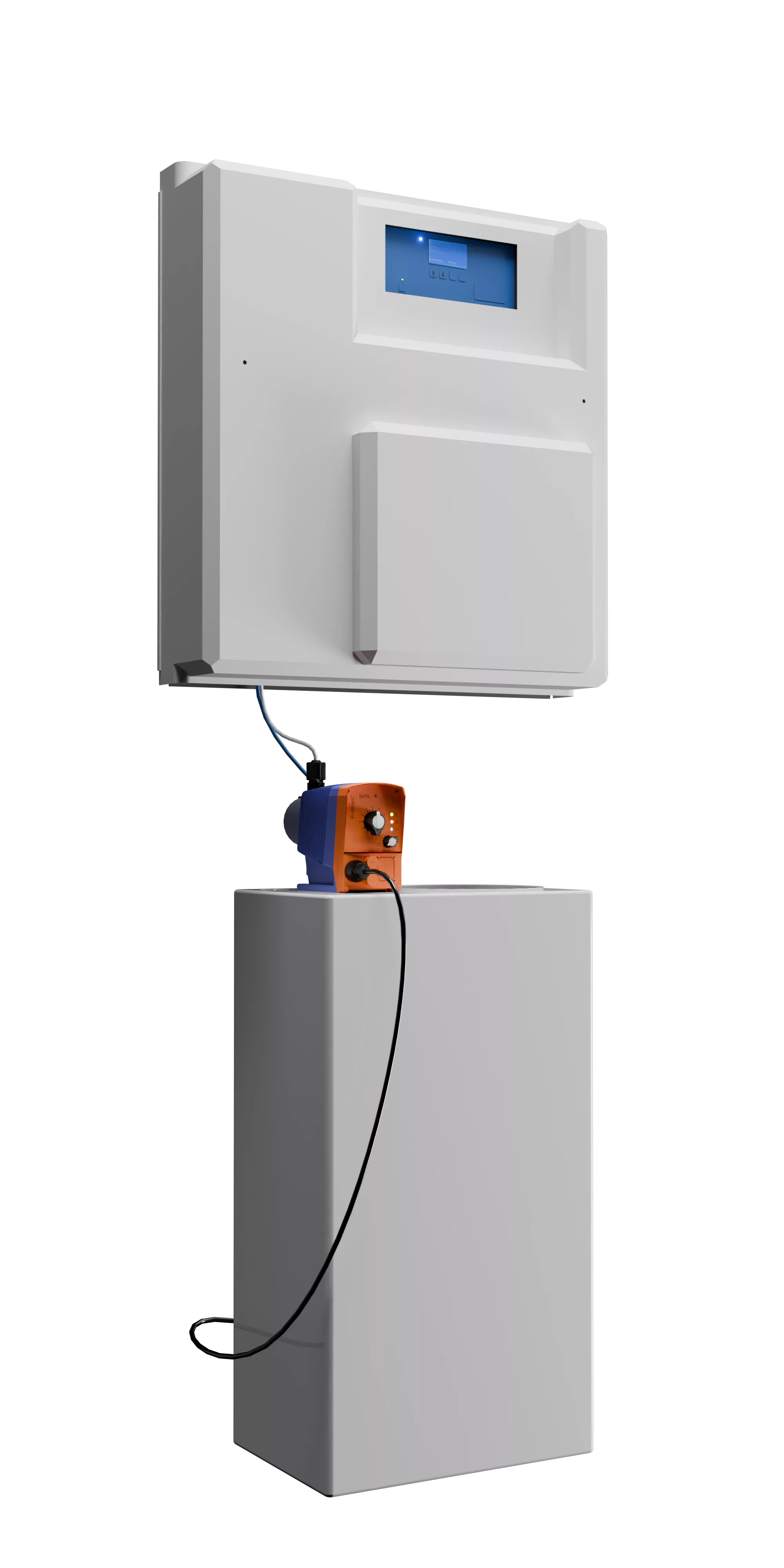
Low-water-consumption system
Choosing the right water treatment system can have a significant impact on your pool’s water consumption. That is why we at EWT design and develop sustainable and efficient electrolysis systems. Future-proof technology with significant benefits for your pool experience.
Membrane electrolysis systems convert salt into active chlorine within the unit. This is released directly into the pool water at the point of generation, meaning that no disinfection by-products enter your pool. This extends the water replacement cycle and helps prevent skin irritation.
How often should I test the pool water?
It is recommended that you test the pool water at least once a week to check its chemical composition and water quality. More frequent testing may be necessary if required, particularly when the pool is in heavy use or during extreme weather conditions.
How do I adjust the pH level of the pool water?
The pH level of the pool water should be between 7.2 and 7.6 to ensure optimal disinfection and water clarity. To adjust the pH level, pH reducers or pH increasers can be used as required. Ideally, your pool water treatment system will automatically regulate the pH, chlorine and redox levels.
What can I do to prevent algae growth in my pool?
To prevent algae growth, it is advisable to ensure that the water is continuously and adequately disinfected. It is also important to monitor the water balance, particularly the pH level and alkalinity, and adjust them as necessary.
Which parameters should I test in my pool water?
The most important parameters that should be tested are the pH level, chlorine content, alkalinity and water hardness. These parameters affect water quality and must be monitored regularly. Automated measurement and control systems can assist you with this.
How do I maintain the chlorine level in the pool water?
The chlorine level in pool water is important for killing bacteria, viruses and algae and keeping the water clean. This can traditionally be achieved by adding chemicals, but the gentlest method is to use an EWT membrane electrolysis system. With this system, active chlorine is produced on-site from harmless table salt, exactly as required.
How often should I clean the pool?
The pool should be cleaned regularly to remove dirt, leaves, insects and other debris. This involves vacuuming the floor, cleaning the pool walls and removing debris from the water’s surface. The frequency depends on how often the pool is used.