Membrane electrolysis 250
Type 250 Membrane Electrolysis
High-performance, electrochemical water disinfection for public outdoor pools, indoor pools, school swimming pools, and therapy pools.
technology
Free-hanging membrane cell for professional use
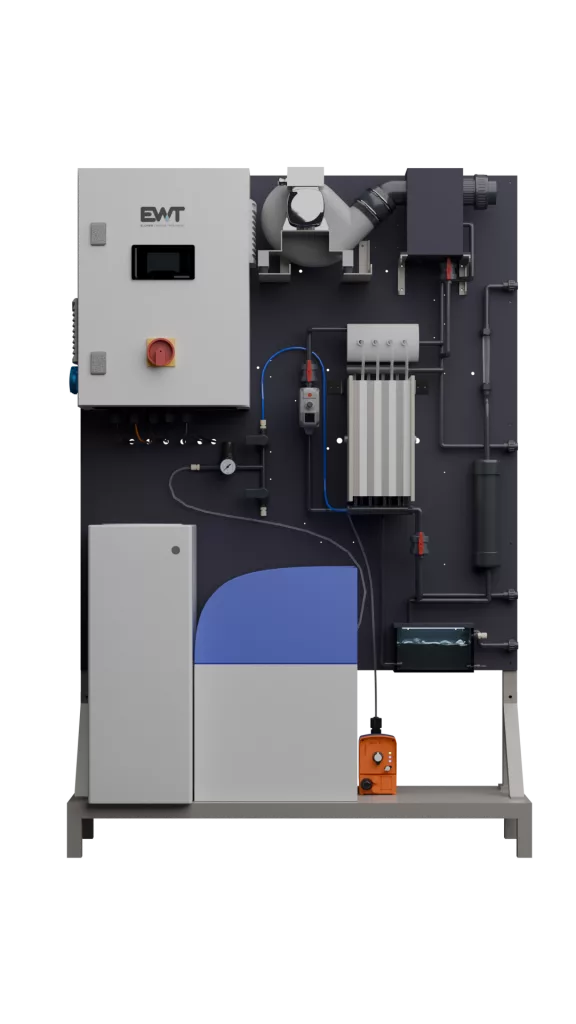
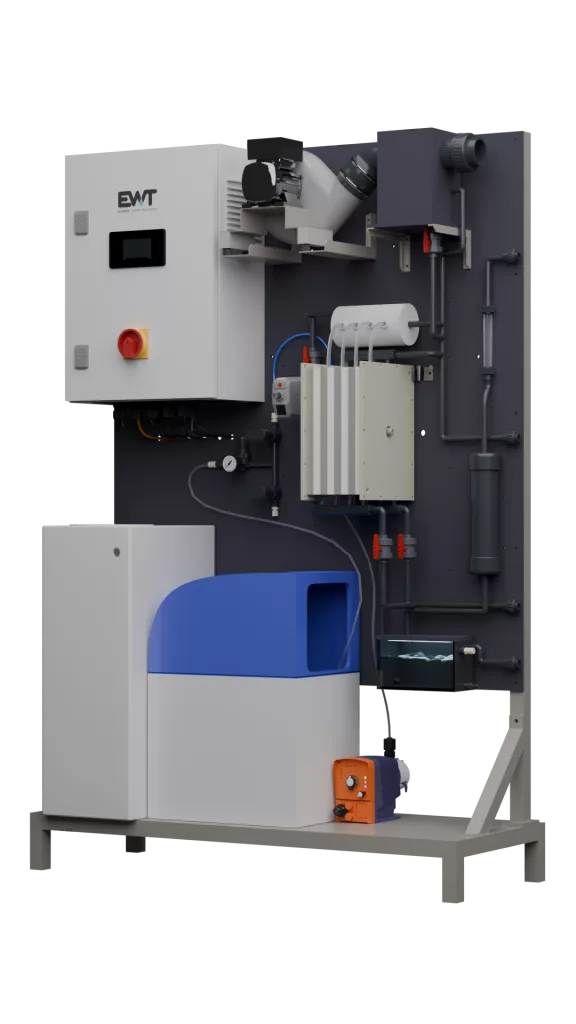
The EWT Type 250 membrane electrolysis system continuously produces highly effective hypochlorous acid from natural salt and is designed for continuous operation in public swimming pools. Unlike the compact Models 24 through 100, the Model 250 features a free-hanging cell mounted on a freestanding steel frame that is pre-assembled at the factory, significantly reducing on-site installation effort.
The system is connected to both the pool water and a fresh water line. The fresh water is used exclusively for production and is softened to 0 to 1° dH by a separate water softener; a pressure reducer lowers the inlet pressure to 1 bar to maintain constant conditions in the electrolysis cell. A pre-installed chlorine gas sensor ensures additional operational safety.
Rated power
250 g Cl₂ / h
Salt consumption
~ 25 kg / day
Here’s how it works
The Synthesis Cycle
From plain table salt to highly effective, crystal-clear bath water in three automated, safe steps.
1
Automatic brine formation
Incoming fresh water is softened to 0–1° dH by a dedicated water softener and processed into a saturated brine solution in the 90-liter storage tank using high-purity evaporated salt. Under continuous operation, up to 25 kg of salt is consumed per day.
2
Electrochemical Splitting
The brine is fed into the free-hanging membrane cell. Under precise direct current supply and strict spatial separation by the membrane, highly pure, germicidal hypochlorous acid is produced—up to 250 g of active chlorine per hour at a flow rate of 300 l/h.
3
Safe Injection
Using the injector principle, fresh active chlorine is introduced directly into the main flow of pool water. The suction is continuously monitored; if the flow falls below a minimum level, production shuts off automatically.
For professional use
Areas of Application
Public Outdoor Swimming Pools
Reliable disinfection even during periods of high visitor traffic and peak demand. Crystal-clear, odorless water without any pungent chlorine fumes in outdoor areas.
Public Indoor Swimming Pools
In indoor swimming pools, consistent air quality is crucial. Precise dosing prevents the formation of combined chlorine (chloramines) and thus eliminates the typical swimming pool odor, which can often be harmful to health.
School swimming pools
Consistent, reliable water hygiene for daily school and club operations—with reduced maintenance requirements and predictable operating costs.
Therapy Pool
The controlled synthesis process creates a mild environment that is gentle on the skin and eyes, free of chloramines and without excess salt buildup—ideal for sensitive user groups in medical and rehabilitation settings.
Data Overview
Comparison of system sizes
| Parameter | Type 250 | Type 500 |
|---|---|---|
| Nominal output (active chlorine) | 250 g Cl₂ / h | 500 g Cl₂ / h |
| Recommended tank size | Public | Public |
| Water consumption in operations | 12,5 l/h | 25 l/h |
| Max. salt consumption (24h continuous load) | 25 kg/day | 50 kg/day |
| Electrical power consumption | 2,3 kVA | 5,0 kVA |
| Dimensions H x W | 2.010 x 1.300 m | 2.010 x 1.020 mm |

Video-Tutorials
Learn everything about the professional installation, ongoing operation, and simple maintenance of membrane electrolysis systems in our detailed tutorials.
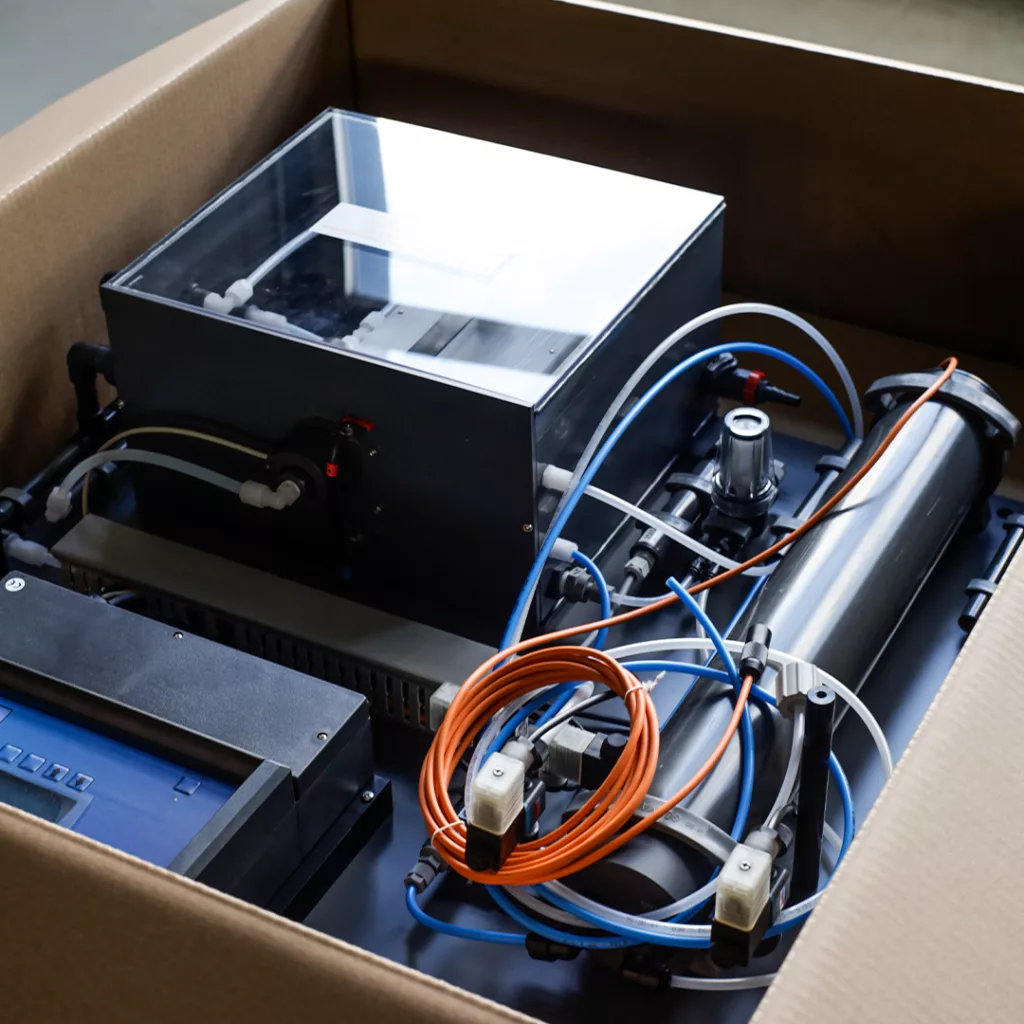
System Overview
Get to know all the key components of an EWT membrane electrolysis system.
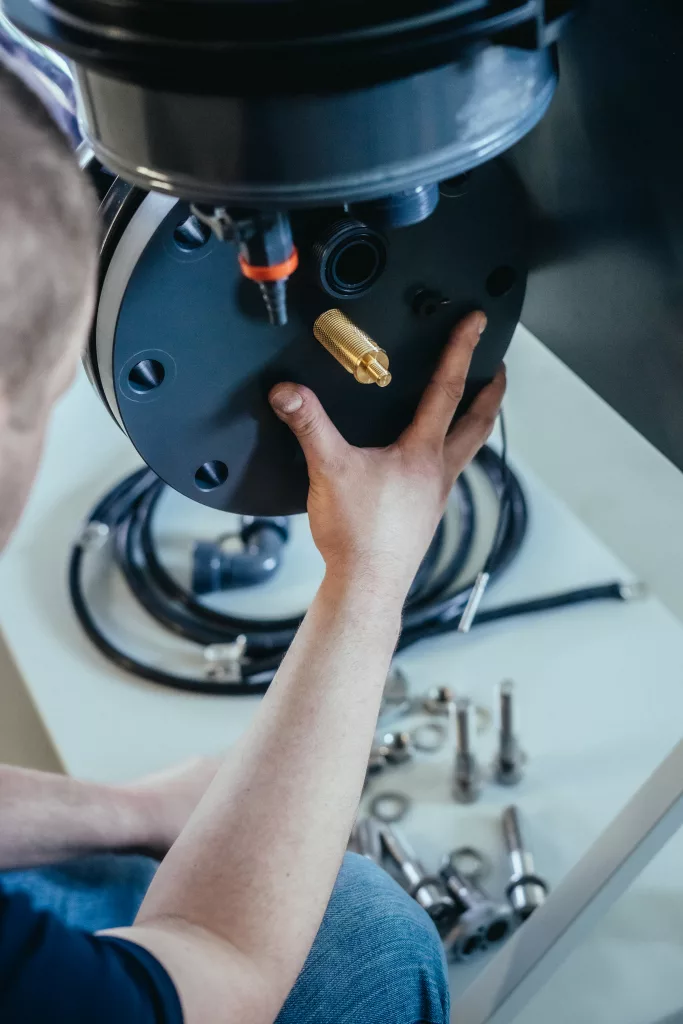
Saltwater pools.
The system and its performance capabilities are specifically scalable and designed to meet the spectrum of your requirements.
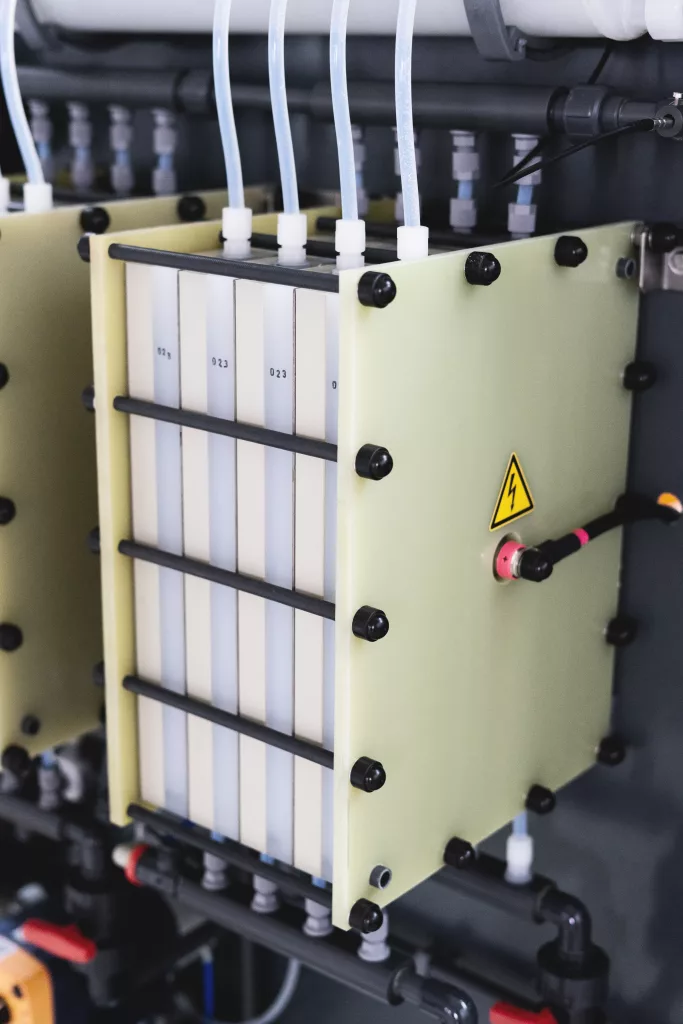
Renewal of a facility.
Our systems are suitable not only for new installations but also integrate seamlessly into existing systems.
Technical Advice & Price Inquiry
Would you like to upgrade your filtration system to modern, chlorine-odor-free membrane cell technology, or are you planning a new pool project? Send us your configuration.
Further information
Downloads
All relevant documents regarding membrane electrolysis at a glance.
Frequently Asked Questions
FAQ on the Type 250 Membrane Electrolysis System
How often does the salt need to be refilled in a Type 250 membrane electrolysis system?
The Type 250 consumes up to 25 kg of salt per day during continuous operation. The salt is automatically dispensed from a 90-liter storage tank; at this rate of consumption, regular—possibly daily—refilling is recommended.
What distinguishes the Type 250 from the compact Types 24, 48, and 100?
The Type 250 uses a free-hanging cell mounted on a freestanding, factory-assembled steel frame instead of a submerged cell mounted on a PVC wall panel. It also requires a fresh water connection with a water softener, since it does not operate exclusively using pool water.
Does the water smell like chlorine during membrane electrolysis?
Precise dosing prevents the formation of combined chlorine (chloramines), which is responsible for the typical pungent swimming pool odor. This makes the indoor environment significantly more pleasant, especially in heavily used public indoor swimming pools.
For which applications is the Type 250 suitable?
The Type 250 is designed for professional continuous operation: public outdoor pools, public indoor pools, school swimming pools, and therapy pools. For even larger water volumes, the Type 500 is recommended; for private use, the Types 24, 48, or 100 are recommended.
Does the Type 250 require a fresh water connection?
Yes. Unlike the compact models, the Type 250 is connected to a fresh water line in addition to the tank water. The fresh water is softened separately and brought to constant operating conditions via a pressure reducer.
Can the system be retrofitted into an existing pool?
Yes, the system is suitable for both new installations and retrofitting existing bathrooms. The freestanding, pre-assembled steel frame significantly reduces the amount of on-site installation work required.